

Dr.Moria Levy's Blog



The Next Era of Knowledge Management: Four Strategic Shifts
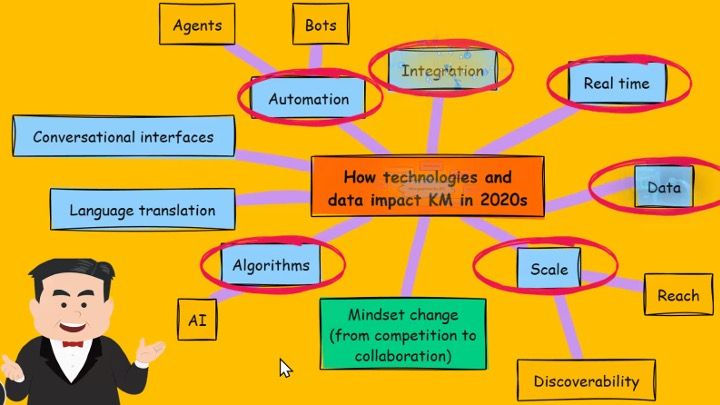
Explore how AI is reshaping Knowledge Management through three evolutionary horizons and four strategic shifts- from managing knowledge to creating competitive advantage through human-AI collaboration, scalable expertise, continuous innovation, and knowledge-driven strategy.



If you want to change the culture… why do we keep focusing on processes?
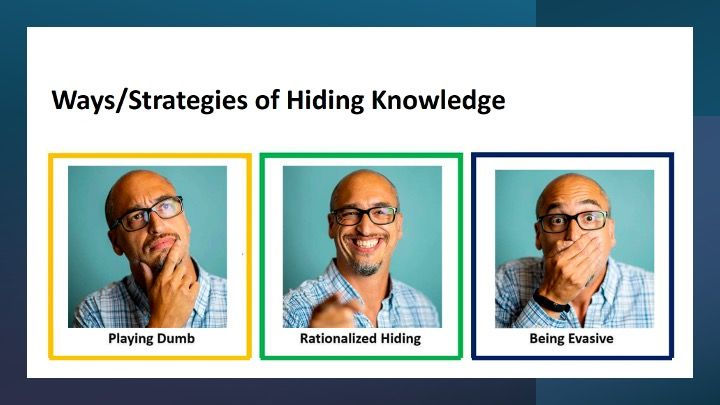
Discover how storytelling drives cultural change in organizations. Learn why real, everyday stories- not messages- shape beliefs, and how Knowledge Management can capture and amplify them to turn change from an initiative into a shared, sustainable reality.


What does it take to turn KM into a true engine of business excellence?
Explore how Afcons’ Knowledge Services Group embeds KM into business strategy, workflows, and leadership to drive real outcomes. Key success factors include active leadership, knowledge in daily work, and strong employee engagement- turning KM into a true engine of organizational performance.


AI pilots are everywhere. Real impact is much rarer. WHY?
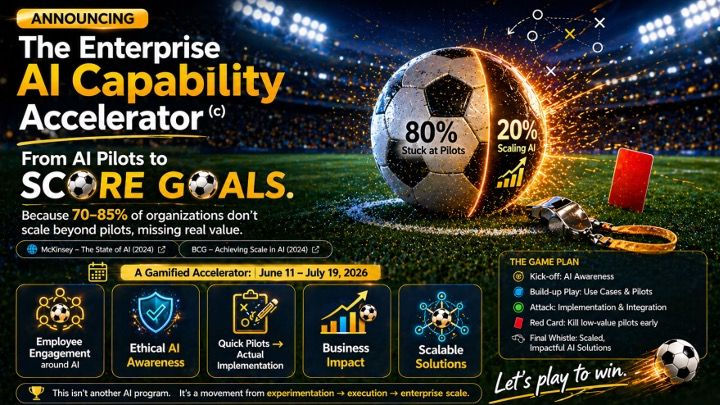
AI pilots are common, but real business impact is rare. Discover why most AI initiatives fail to scale and how Knowledge Management, quality, and learning leaders can turn AI experiments into real operational value. Join the webinar to explore practical strategies for successful AI adoption.

ISO 30401: More Than a Standard. A North Star for KM Excellence
ISO 30401 provides a practical framework for building effective Knowledge Management systems aligned with business goals. Learn how the standard supports KM strategy, leadership, culture, and continuous improvement- helping organizations strengthen performance, create value, and achieve KM excellence.


When is a guerrilla KM approach not just possible — but required?
Sometimes the smartest KM strategy isn’t pushing harder- it’s moving differently. Guerrilla Knowledge Management uses small, low-cost initiatives to create momentum, demonstrate value, and build support when formal paths are blocked. Discover when these approaches become not just useful- but necessary.

Choosing a strong strategy model is the first step toward the future we claim to pursue
Explore how clear strategic models turn intention into impact. Discover why choosing the right framework- aligning knowledge, collaboration, and positioning- transforms KM from an operational function into a competitive advantage, bridging today’s reality with tomorrow’s success.

AI does not create business value. Knowledge does.
Most organizations don’t need flashier AI - they need smarter use of their own expertise. This session explores how embedding expert knowledge into AI agents turns real business challenges into better decisions, stronger quality performance, and measurable results.

What if the real shift is not in managing risks, but in how we manage them?
Explore key insights from the KMGN Strategy Course on knowledge-based risks, highlighting the value of a neutral perspective, strategic discernment, and the growing role of knowledge managers and subject matter experts in the age of AI.


The Sharpest AI talk at KMWorld 2025 (So Far)
Jeff Evernham’s KMWorld 2025 session delivered sharp, practical guidance on enterprise AI agents: focus on real business value, execute with rigor, and scale securely. In the AI era, success belongs not to those who build fast, but to those who build wisely.

Walmart leads, also in the way it approaches AI
Walmart’s KMWorld 2025 keynote highlighted a crucial truth: AI success isn’t about the technology alone, but about human-led strategy, responsible use, and maintaining the curiosity and judgment that keep organizations ahead in a rapidly widening maturity gap.

From Risks to Results: Adobe’s Practical Lessons for KMers Working with AI
LLM-based taxonomies offer huge potential, but success requires managing risks, spotting common mistakes, and using smart prompting techniques. As AI accelerates KM work, an important question remains: does it elevate KMers - or simply reduce the effort required?


The missing link between GenAI tools and KM impact
Generative AI is reshaping work, but its impact depends on how people create and use knowledge. This is a key moment for Knowledge Managers to lead - guiding AI adoption through education, integration, and responsible change so AI becomes not just powerful, but genuinely human-aware.


What unique AI advantage can your organization build to lead the AGI transformation?
In a compelling session with digital transformation expert Yesha Sivan, we explored how organizations can gain a true competitive edge in the AGI era by developing unique, proprietary AI capabilities. Beyond adopting existing tools, the real opportunity lies in creating innovations only your company can deliver-supported by the right business strategy, culture, digital foundations, and leadership.


KM AI Agents Series – Post 2: After Action Learning Facilitator
KM AI Agent #2 - the After Action Learning Facilitator - elevates debriefings by guiding users through deeper, structured reviews that uncover root causes and meaningful lessons. It transforms AARs from surface-level observations into powerful organizational learning.


KM Knowledge Bytes: The Three Faces of AI Agents Every KMer Should Know
AI agents are everywhere - but not all knowledge is created equal. As RAG tools rise and automation expands, the real opportunity for KM lies in building smart, expert-driven agents that capture insights, support decisions, and reshape how organizations work.


Rethinking Knowledge Management: Key Lessons from Dave Snowden
Dave Snowden’s lecture turns traditional Knowledge Management on its head - moving away from case studies and documentation toward abstraction, ambiguity, and fresh perspectives. His focus on informal trust networks and pairing new thinkers with seasoned experts offers a powerful path to true innovation.

Talking to AI: Three Ideas to Elevate Our Conversations
What if AI became more than a quick-answer tool? By pushing it to think differently, engaging in long-term dialogue, and questioning its assumptions, we turn AI into a true thinking partner - one that sharpens our creativity, exposes hidden biases, and deepens our decision-making.


Knowledge-Bytes: A New Series on Knowledge Management
Knowledge retention succeeds when we focus on the most critical knowledge and dig deep to reveal tacit expertise. With smart prioritization and reflective, guided conversations - now enhanced by ROM Global’s AI agents - we can capture what truly matters for the organization’s future.


Why is Applying Generative AI a critical competence for every Knowledge Manager?
Generative AI is redefining how organizations learn and create knowledge. Our course helps KMers harness this shift - mastering prompts, improving conversations, driving responsible AI adoption, and leading real organizational transformation.

Unlocking Generative AI for Real-World Management Success
Real-world GEN AI training becomes transformative when managers apply it to their toughest decisions. By guiding them through thoughtful, context-rich AI conversations, they quickly see how human judgment and AI insight together elevate decision-making and build confidence in everyday management.

The Value of Tacit Knowledge: A Balanced Perspective
Tacit knowledge is essential, but its value isn’t defined by being hidden - it’s defined by its depth and impact. By capturing, sharing, and prioritizing both tacit and explicit knowledge wisely, organizations can unlock far greater value from what their experts know.


Embracing the AI Revolution: Transforming Knowledge Work - TOGETHER! – Post 3: Finding Experts
GEN AI is reshaping how organizations identify “who knows what.” By improving expert discovery, offering intuitive visualizations, and enabling user-centric customization, AI makes expertise more accessible -helping knowledge workers create greater value together.


The New KnowledgeWork - Post 2: DecisionMaking
Our KMAI coalition explored how Generative AI can elevate decision-making, revealing that AI knowledge-driven agents can guide comprehensive choices with greater speed, structure, and depth - ushering in a new era of smarter, systematically managed decisions.


Embracing the AI Revolution: Transforming Knowledge Work - TOGETHER!
In 2023, the KM AI Coalition brought together global partners to explore how Generative AI can revolutionize decision-making, expert finding, and file work - laying the groundwork for a new era of collaborative, AI-enhanced knowledge management.

Brainstorming… a storm of brains positively clashing together
In this session, we explored how brainstorming unlocks tacit knowledge - through documenting hidden insights, using brainwriting, staying with the question, and even brainstorming alone - while Generative AI opens new possibilities for deeper, more creative idea generation.

Enhancing Knowledge Management through Lessons Learned
In our KMGN course on leveraging tacit knowledge, we explored how rebranding Lessons Learned, fostering psychological safety, deep drilling, creative thinking, and structured debriefing can transform hidden insights into real organizational value.

Communities Of Practice: Unleashing Tacit Knowledge for Business Value
In our KMGN session, Stan Garfield highlighted how Communities of Practice spark deeper questions, surface hidden tacit knowledge, and transform it into real business value through diverse participation, meaningful discussions, storytelling, and structured documentation.


%20-%20Part%20A.jpeg)


Enhancing the Effectiveness of Co-creation
Despite humanity’s long history of collaboration, co-creation often struggles today due to communication gaps, trust barriers, and fragmented processes. By strengthening activities, processes, people, projects, and culture, we can unlock more meaningful and impactful co-creation.

Decision-Making in the New Era of Collaboration
In today’s complex collaborative landscape, decision-making is harder than ever. By embracing co-opetition, aligning around shared purpose, and using technology for transparency, teams can navigate diverse agendas and reach stronger, more trusted decisions.

Harnessing the Power of Co-Creation: A Case for Design-Thinking Based Hackathons
Hackathons have become dynamic hubs of co-creation, and when paired with a simple, focused design-thinking approach - Inspiration, Ideation, and Implementation - they unlock collective wisdom, accelerate innovation, and elevate collaborative impact.
