

Management and Knowledge Management Book Reviews
by Dr. Moria Levy

Making Sense of Change Management - Book review
Making Sense of Change Management explains that successful change does not follow a single formula; it requires matching the right approach to individuals, teams, organizations, and leadership contexts. Its practical value lies in helping managers understand different change models and combine them wisely for restructuring, culture shifts, mergers, and process change. Numerous books have explored and will likely continue to delve into change management, a nuanced and complex field that...

Knowledge Management in Theory and Practice - Book Review
Knowledge Management in Theory and Practice presents knowledge management as a structured discipline that connects theory with practical action across capture, sharing, application, strategy, culture, measurement, and technology. Its value lies in giving organizations a full framework for turning tacit and explicit knowledge into reusable assets that improve learning, decision-making, innovation, and performance. The book "Knowledge Management in Theory and Practice," by Kimiz Dalkir in 2005,...

Developing a Framework for Knowledge Management for Global Projects - Book Review
Developing a Framework for Knowledge Management for Global Projects shows that global project success depends on combining knowledge management, communication, and collaboration across cultures, virtual teams, and distributed stakeholders. Its practical value lies in offering a framework for capturing, sharing, and reusing project knowledge to improve coordination, reduce risk, and strengthen outcomes in international projects. The book titled "Developing a Framework for Knowledge Management...
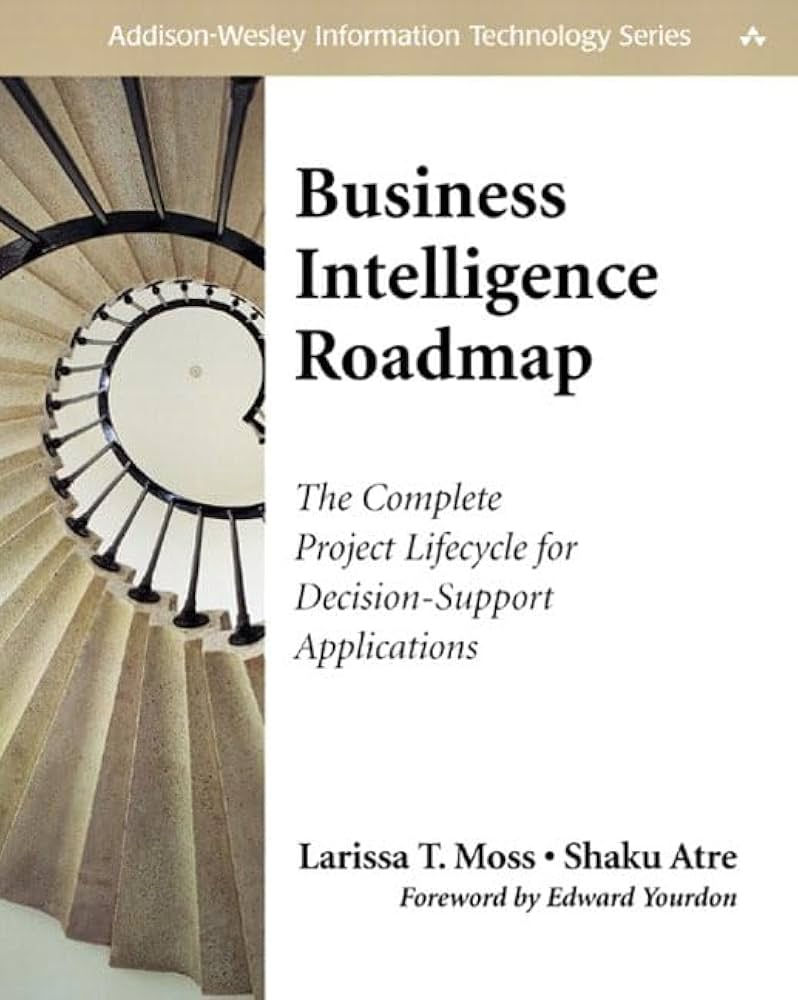
Business Intelligence Roadmap – Book Review
Business Intelligence Roadmap presents BI as a disciplined, end-to-end methodology for turning business needs into data-driven decision support. Its practical value lies in showing how to justify, plan, design, build, and release BI environments systematically, helping organizations reduce project risk, improve data quality, and deliver usable analytics in manageable iterations. There is no doubt that the book "Business Intelligence Roadmap," written in 2003 by two women, Larissa T. Moss and...

Customer-Centric Selling- Book Review
Customer-centric selling is a structured approach that shifts sales from pitching products to diagnosing needs, guiding decisions, and empowering customers to achieve business goals. Customer-Centric Selling shows how conversation-based selling, scenario thinking, and value-focused engagement improve persuasion, adoption, and results in both external and internal organizational contexts. What do we, as knowledge managers or BI and sales activity managers, have to do with this? What is the...

Drive Business Performance – Book Review
Business performance management is a disciplined approach that integrates monitoring, analysis, and planning to align strategy with execution and improve results. Drive Business Performance shows how organizations use data, KPIs, and performance culture to strengthen decisions, increase agility, and build sustained competitive advantage. Once again, we thank the software company. The book Drive Business Performance, which sheds light on business intelligence and how to implement it properly,...

Business Intelligence Competency Centers - Book Review
A Business Intelligence Competency Center (BICC) is a cross-functional governance model that aligns people, processes, data, and technology to scale business intelligence across the enterprise. Business Intelligence Competency Centers shows how BICCs improve BI adoption, data quality, decision-making, and organizational performance through structured governance and maturity-based development. The book "Business Intelligence Competency Centers" was authored by three SAS employees as part of...

Collaboration2.0 - Book Review
Collaboration 2.0 is a people-centered approach to teamwork that combines social technologies, shared processes, and trust-based agreements to improve communication and collective results. Collaboration2.0 shows how organizations can strengthen cooperation by integrating collaborative tools with cultural norms, clear roles, and outcome-oriented work practices. The book "Collaboration2.0" is a publication from 2008, co-authored by two individuals deeply immersed in the collaboration field:...

Competing on Analytics - Book Review
Analytics-driven competition is a strategy of using data, predictive models, and fact-based decisions to create sustained business advantage. Competing on Analytics shows how organizations build competitive strength by combining analytical capabilities, leadership commitment, skilled people, and technology to improve decisions, innovation, and performance. The book "Competing on Analytics," co-authored by Prof. Thomas Davenport and Ms. Jeanne Harris, follows Davenport's renowned work,...

Wisdom of the Crowds - Book Review
Wisdom of the Crowds argues that large groups can make better judgments than experts when diversity, independence, and effective aggregation are present. Its practical value lies in showing leaders, scientists, and organizations how to structure decisions so collective insight improves forecasting, problem-solving, coordination, and innovation. For good reason, the book " Wisdom of the Crowds " has become a cornerstone of the WEB2.0 world. Authored by James Surowiecki in 2004, it introduces...

Managing the Knowledge Workforce - Book Review
Managing the Knowledge Workforce defines knowledge workers as a distinct class requiring management practices built around collaboration, knowledge sharing, mobility, and enabling technologies. Its practical value lies in showing how organizations can reduce friction, improve productivity, and lead knowledge workers through communication, tools, and adaptive management. Gain insights into how the information revolution is reshaping the business landscape. We currently find ourselves immersed...

Change Management - Book Review
Change Management defines successful change as guiding people through awareness, desire, knowledge, ability, and reinforcement so business change delivers results. Its practical value lies in showing leaders how to reduce resistance, align sponsorship, and build organizational adaptability, turning change capability into a sustained competitive advantage. While casual and not glamorous, the book's unassuming title accurately mirrors its content. This simplicity characterizes the book...